How to Ask a Recruiter About Your Application Status (Without Being Annoying)
You submitted your application five days ago. Then eight days. Now it's been two weeks and your inbox is a wasteland of promotional emails and silence. You want to follow up, but the thought of coming across as desperate or impatient keeps you frozen.
Here's the truth: recruiters expect follow-ups. What they don't expect — or appreciate — is poorly timed, vague, or guilt-trippy messages that make them feel cornered. The difference between a follow-up that moves your candidacy forward and one that kills it comes down to timing, channel, and exact wording.
Why Following Up With a Recruiter Actually Matters
Recruiters at mid-size companies handle 50-100+ open requisitions simultaneously. At enterprise companies, that number can spike to 200+. Your application isn't being ignored out of malice — it's competing for attention against hundreds of others in an ATS application tracking system.
A well-crafted follow-up does three things:
- Resurfaces your name in a recruiter's consciousness during their busiest weeks
- Signals genuine interest — recruiters track engagement because it predicts offer acceptance rates
- Creates a micro-touchpoint that separates you from the 85% of applicants who never follow up at all
I've seen candidates move from the "maybe" pile to the interview shortlist purely because their follow-up reminded me to look at their profile again during a window when I had bandwidth.
When to Ask: The Right Timing for Each Stage of the Process
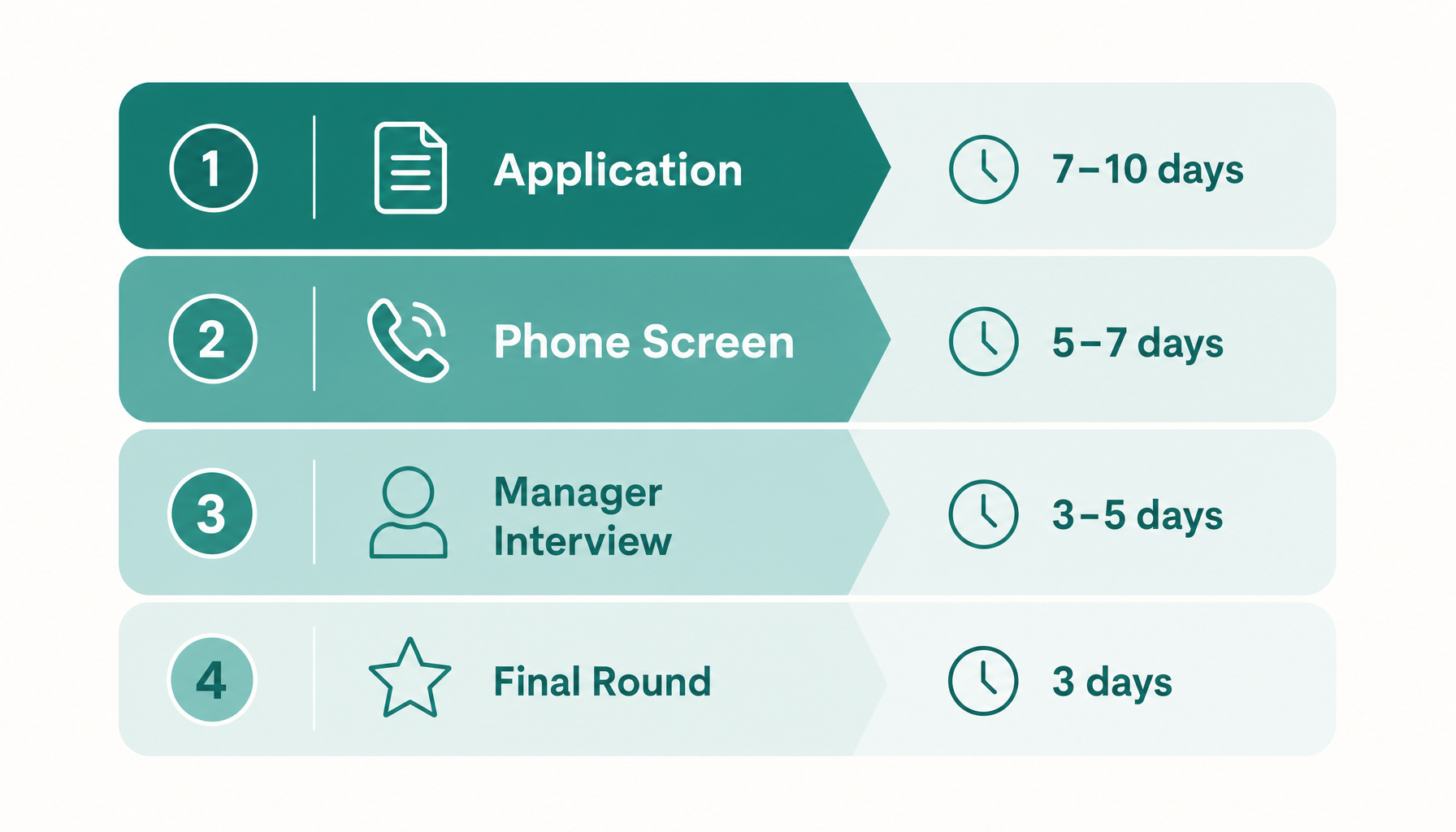
Job application follow-up timing varies based on where you are in the process:
After submitting an application (no prior contact): Wait 7-10 business days. Most companies need at least a week for initial ATS screening and recruiter review.
After an initial recruiter phone screen: Wait 5-7 business days beyond whatever timeline they gave you. If they said "you'll hear back within a week," follow up on day 8.
After a hiring manager interview: Wait 3-5 business days. The process moves faster at this stage, and silence beyond a week often means a decision is stalling.
After a final-round interview: Wait 3 business days, then reach out. At this stage, you've earned the right to ask directly.
How to Ask a Recruiter About Your Application Status (By Channel)
Email works best for: initial follow-ups, formal processes, large companies. It gives recruiters time to check your status before responding.
LinkedIn works best for: when you don't have a direct email, when you connected with the recruiter during networking, or when email has gone unanswered for 5+ days.
Phone works best for: when you're past the interview stage, when a deadline is approaching (competing offer), or when the recruiter previously called you. Never cold-call a recruiter about an application you submitted online.
Word-for-Word Templates: Email, LinkedIn, and Phone Scripts
Email Template (Post-Application)
Subject: Following up — [Job Title] application ([Your Name])
Hi [Recruiter Name],
I submitted my application for the [Job Title] role on [date] and wanted to confirm it was received and see if there's any additional information I can provide.
I'm particularly drawn to this role because [one specific sentence about why — tie it to something concrete about the company]. My background in [relevant skill] aligns directly with the requirements you outlined.
Happy to work around your timeline. Thanks for your time.
[Your Name]
LinkedIn Message (When You Lack Email)
Hi [Name] — I applied for the [Job Title] role at [Company] about a week ago and wanted to express my continued interest. I know you're likely managing a full pipeline, so I'll keep this brief: I'd love the chance to discuss how my [specific experience] maps to what you're looking for. No rush on a response — just wanted to put a face to the application. Thanks!
Phone Script (Post-Interview Stage)
"Hi [Name], this is [Your Name] — we spoke on [date] about the [Job Title] position. I'm following up to check on timing for next steps. I remain very interested in the role, and I wanted to see if there's anything else you need from me to move forward."
What to Say If You've Already Followed Up Once
This is where most candidates panic. You sent one polite follow-up email after applying and got no response from the recruiter. Now what?
Wait another 5-7 business days, then send a shorter, lighter message:
Hi [Name] — just floating this back to the top of your inbox. Still very interested in the [Job Title] role and happy to provide anything that would be helpful. No pressure — I know things get busy.
That's it. Two follow-ups is the maximum for the application stage. After two unanswered messages, the silence is your answer — for now. File it away and move on. Sometimes recruiters circle back weeks or months later when a role re-opens.
If you're post-interview and haven't heard back after one follow-up, you have more latitude. A second follow-up email after an interview is entirely appropriate, especially if you reference a specific timeline they originally gave you: "You mentioned a decision by end of week — just checking in to see if that shifted."
Red Flags in Recruiter Responses (and What They Really Mean)
"We're still interviewing other candidates" = You're not the frontrunner, but you're not eliminated. They're comparison shopping.
"The role is on hold" = Budget got frozen, the hiring manager left, or priorities shifted. This is usually true, not a brushoff — but the role may never reappear.
"We'll keep your resume on file" = Rejection delivered gently. Move on completely.
"The hiring manager hasn't made a decision yet" = There's likely an internal candidate or a debate happening. You're still alive but not in control.
Radio silence after an interview + one follow-up = They've moved forward with someone else and haven't gotten around to rejection emails. This is cowardly but extremely common.
How to Strengthen Your Position While You Wait
Waiting is the hardest part of a job search, but it's also recoverable time. Here's what to do between follow-ups:
Apply to more roles. Never let a single application become your entire emotional portfolio.
Refine your resume for similar roles. If you're applying to adjacent positions, each application should be tailored to that specific job description.
Audit your keyword alignment. One reason applications stall in ATS systems is a mismatch between your resume language and the job posting language. If the posting says "stakeholder management" and your resume says "working with teams," you've already lost points before a human ever sees your file.
Want to see exactly where you stand? Paste the job description you applied to into Resume Inspector — it's free, no credit card needed — and you'll see which keywords you're missing and how well your resume actually matches the role. If you're waiting to hear back anyway, you might as well use that time to strengthen your application materials for the next opportunity (or for a resubmission if the recruiter asks for an updated resume).
Update your LinkedIn. Recruiters will check your profile after your follow-up reminds them you exist. Make sure your LinkedIn summary and headline match the narrative of your application.
Common Mistakes That Kill Your Chances When Following Up
Sending the follow-up too early. Day 3 after an application signals impatience, not enthusiasm. Recruiters notice — and not in a good way.
Writing long emails. Your follow-up should be 4-6 sentences maximum. Recruiters skim. If they have to scroll, you've already lost.
Apologizing for following up. "Sorry to bother you" undermines your professionalism. You're not bothering anyone — you're conducting a business conversation.
Following up with multiple people simultaneously. If you email the recruiter and the hiring manager and someone on the team on the same day, it looks coordinated and pushy. Pick one contact per follow-up cycle.
Using passive-aggressive language. "I haven't heard back and I'm starting to wonder if this role is still open" reads as a guilt trip. Assume positive intent until proven otherwise.
Not providing a reason to respond. The best follow-ups give the recruiter something easy to reply to — a yes/no question, a piece of new information ("I just completed [relevant certification]"), or a specific ask ("Would it be helpful if I sent a brief portfolio sample?").
The recruiters who remember you favorably are the ones who found you professional, concise, and easy to work with — even in the follow-up stage. Nail that, and you've already differentiated yourself from 90% of the candidate pool.
Before your next follow-up, make sure your resume is actually earning its keep. Run a free ATS compatibility check to confirm your formatting isn't filtering you out before a recruiter even sees your name.