How to List References on a Resume (The Right Way, With Examples)
You've polished your bullet points, agonized over your summary, and finally feel good about your resume. Then you hit the references section and freeze. Do you include them? How many? What format? And what happens when your last boss was a nightmare you'd never want a recruiter calling?
Here's the full decision tree — not just formatting templates, but the strategic choices that actually matter.
Should You Even Put References on Your Resume?
The short answer for most job seekers in 2026: No. Don't put references directly on your resume.
Here's why:
- Space is precious. Three references eat 6-8 lines — that's space better used for quantified accomplishments or relevant skills.
- ATS systems don't care. Applicant tracking software parses for skills, job titles, and keywords. Reference names add zero value to your match score.
- Privacy concerns are real. Listing your references' phone numbers on a document that gets uploaded to dozens of company databases exposes them to spam.
The exceptions where you should include them:
- The job posting explicitly says "include references on your resume."
- You're in academia, where CV references are standard.
- You're applying to a government or security-clearance position that requires it upfront.
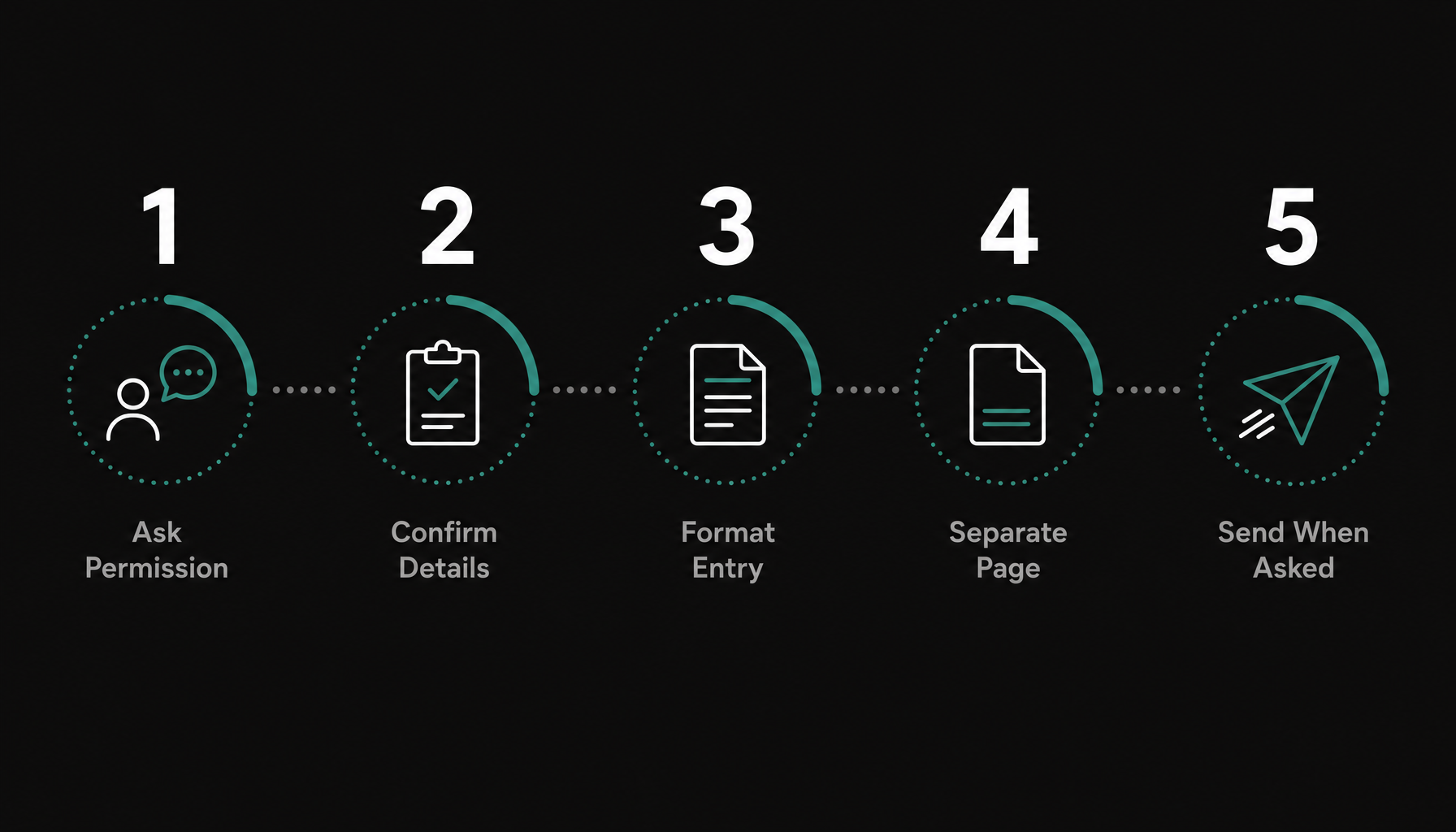
If none of those apply, prepare a separate reference sheet to hand over when asked — typically after the first interview.
And that line "References available upon request"? Kill it. Recruiters already know they can ask. It wastes a line and dates your resume to 2005.
How Many References Should You List?
Three is the standard. Five is the maximum most employers will ever check. Here's the breakdown:
| Situation | Number to Prepare |
|---|---|
| Entry-level / early career | 3 references |
| Mid-career (5-15 years) | 3-4 references |
| Senior / executive roles | 4-5 references |
| Academic positions | 3-5 (often specified in posting) |
Always have at least one more reference prepared than you think you'll need. People go on vacation, switch phone numbers, or simply don't respond to verification calls quickly enough.
Who to Choose as a Professional Reference (and Who to Avoid)
Strong choices:
- A direct supervisor who managed your daily work (most valued by hiring managers)
- A cross-functional colleague who can speak to collaboration
- A client or vendor who saw your external-facing work
- A mentor in your industry who knows your capabilities firsthand
Weak or risky choices:
- Family members (even if you worked together)
- Friends you've never worked with professionally
- A former manager you haven't spoken to in 4+ years
- Anyone you haven't asked permission from first
The distinction between a character reference and a professional reference matters. A character reference vouches for who you are as a person. A professional reference vouches for what you do at work. Most employers want the latter. If a posting says "professional references," your college roommate doesn't count — even if he's a CEO.
How to Format a Reference List: The Exact Template to Follow
Your reference sheet should be a separate document with formatting that matches your resume header. Here's the template:
[Your Name]
[Your Phone] | [Your Email] | [Your LinkedIn URL]

PROFESSIONAL REFERENCES

Sarah Chen
Senior Director of Marketing, Apex Solutions
Relationship: Direct supervisor (2022–2025)
Phone: (555) 123-4567
Email: s.chen@apexsolutions.com

Marcus Williams
Lead Product Manager, Redline Software
Relationship: Cross-functional collaborator (2023–2025)
Phone: (555) 987-6543
Email: m.williams@redlinesoftware.com

Dr. Ayesha Patel
Professor of Data Science, State University
Relationship: Graduate thesis advisor (2020–2022)
Phone: (555) 456-7890
Email: a.patel@stateuniv.edu
Key details to always include: full name, current title, current company, the nature of your relationship, and at least two contact methods (phone + email).
Where to Put References on Your Resume
If the job posting demands references on the resume itself (rare, but it happens), place them at the very bottom — after your education section. Never let references push skills or experience off a page.
For the 95% of cases where you're using a separate reference sheet:
- Save it as "YourName_References.pdf"
- Bring printed copies to in-person interviews
- Email it within one hour when a recruiter requests it post-interview
- Don't attach it to your initial application unless asked
How to Ask Someone to Be Your Reference (With a Script)
The biggest mistake candidates make: listing someone as a reference without asking first. A blindsided reference gives a lukewarm, unprepared response.
Here's an email script that works:
Subject: Quick favor — would you be a reference for me?
Hi Sarah,
I'm currently interviewing for a [Marketing Manager] role at [Company Name] and the position focuses heavily on [campaign strategy and team leadership]. Given that we worked closely on [the Q3 rebrand and the product launch campaign], I think you'd be able to speak to those skills directly.
Would you be comfortable serving as a professional reference if they reach out? I'd be happy to send you the job description and a few bullet points on what I'd love them to hear about.
Totally understand if the timing doesn't work. Thanks either way!
Why this works: It reminds them of specific shared projects, tells them what the role requires, and gives them an easy out. It also offers to prep them — which makes their job easier and your reference stronger.
After they agree, always send them:
- The job description
- 2-3 talking points you'd like them to emphasize
- The company name and who might call
Common Mistakes That Can Tank Your Reference List
1. Using outdated contact info. A recruiter who hits a disconnected number moves on. Verify every phone and email before submitting.
2. Listing a reference who'll give a lukewarm response. "Yeah, she was fine" is worse than no reference at all. If you have any doubt, ask someone else.
3. Not prepping your references for the specific role. A reference who talks about your Excel skills when the job is about leadership hasn't helped you.
4. Submitting references too early. Providing them before asked signals desperation and burns your references' goodwill on roles that may not pan out.
5. Forgetting that your resume matters more. References only get checked after your resume does its job. If your resume isn't matching the keywords and requirements in the job description, no reference list will save you. Before you worry about references, make sure your resume actually passes the ATS screening stage. Want to check? Paste any job description into Resume Inspector — it's free, no credit card needed — and you'll see exactly which keywords your resume is missing in under a minute. References matter, but only after your resume gets you to that stage.
What to Do When You Have No Professional References
This is more common than people admit — especially for career changers, new graduates, or anyone leaving a toxic workplace.
Options that actually work:
- Volunteer supervisors. If you led a fundraiser or coordinated a community event, that person counts.
- Professors or academic advisors. Especially valid within 2-3 years of graduation.
- Freelance clients. Even a small project where someone can confirm your work ethic and skill quality.
- Professional association contacts. A chapter president you collaborated with on an event is legitimate.
- A colleague (not a supervisor) from your last role. Peer references are increasingly accepted, especially when you explain why you can't use a specific manager.
If your situation is "I left a bad job and have no one to ask," be transparent with the recruiter: "My previous manager and I had a difficult working relationship, so I've provided colleagues and a client who can speak to my work." Recruiters hear this constantly. It's not the red flag you think it is.
Try our free Job Keyword Scanner to see how your resume stacks up.
Try our free Job Description Analyzer to see how your resume stacks up.
References on a Resume: Quick-Answer FAQ
Q: Should I write "References available upon request" on my resume? No. It's assumed and wastes space.
Q: Can I use the same references for every job? You can, but tailor which references you provide based on which skills are most relevant. Your data analysis colleague is perfect for an analyst role but less useful for a people-management position.
Q: What if a reference doesn't respond to the recruiter? Have a backup ready. Tell your recruiter proactively: "If you can't reach Sarah, Marcus is also available at [number]."
Q: Do employers still check references in 2026? Yes — 87% of employers verify references at some point in the process according to SHRM's latest survey data. For senior roles, it's nearly universal.
Q: How far back can references go? Keep them within the last 5-7 years if possible. Anything older raises questions about recent performance.
Your reference list is important — but it's the last 5% of the application process. The first 95% is having a resume that actually lands in a human's hands. Get that right first, and the references conversation becomes easy.